1 Day Marketing
Organic Social Media, Done Right
The question isn’t how much to post. It’s what’s actually worth posting.
Posting for the sake of posting isn’t organic social media done right. Most small business owners feel they should be doing “more” on social media: more posts, more platforms, more consistency. But posting more of the wrong thing just means wasting more time for the same result.
Why most small business posts fail
- The content could belong to anyone. A motivational quote could come from a plumber, a bakery or an accountant. It says nothing about you.
- Nobody stops scrolling for generic posts. A few likes from staff and family isn’t marketing.
- Algorithms reward engagement, not effort. Sprout Social’s research on organic reach shows generic, low-engagement posts get shown to fewer people over time.
Treat social media like a portfolio, not a billboard
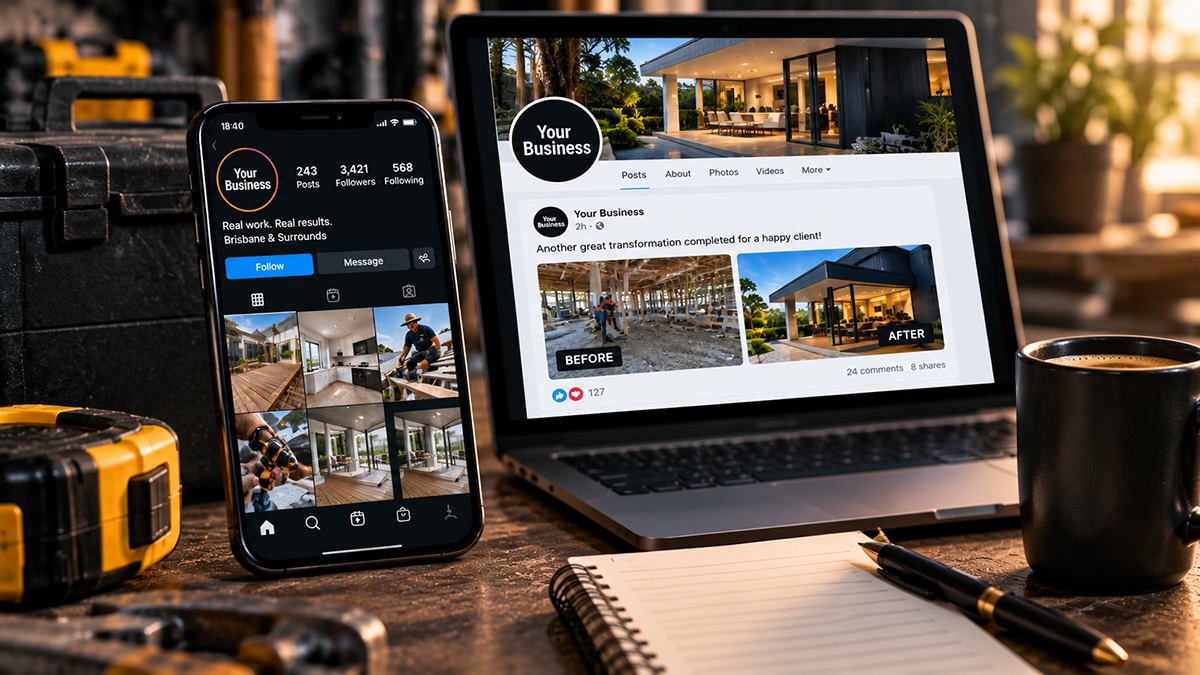
- Show proof you do the work. A finished kitchen gets engagement. “We do kitchens” doesn’t.
- Honesty builds trust. A tradie explaining why a job took longer than expected can build more trust than a five-star testimonial.
- Use the scroll test. Before you post, ask: would I stop scrolling for this? If not, don’t post it.
What you can stop doing
- Inspirational quotes. They all look the same. Show what you actually built instead.
- Generic tips. Everyone has read “five ways to clean your gutters”. A before-and-after of your gutter work gets saved and shared.
- Posting the same thing everywhere. LinkedIn wants expertise, Facebook wants the work and the person, and your Google Business Profile is different again.
- Posting without a reason. A weekly post of real work beats daily filler.
- Buying followers. The customers who matter are nearby and need what you do, not accounts that will never buy.
The one post type that works
- Show the work. A landscaper walks through a backyard before the job, then posts the finished result two weeks later.
- Explain the problem. A mechanic posts a failed part and a plain-English explanation of why it failed.
- Show what’s new. A cafe posts a new dish being plated, with where the ingredients come from.
None of this needs a camera crew or a content calendar. It needs thirty seconds and a phone when something worth showing is happening.
How often should you post?
One good post a week showing real work will beat seven mediocre ones. If you can manage more without resorting to filler, that’s a bonus, not a requirement. The businesses that do this well simply make it a habit: pull out the phone whenever something post-worthy happens.
Proof beats advice
You don’t need graphics, filters or a content calendar. You need real proof that you’re good at what you do, posted where your customers are looking.
If you’d rather have someone work out what that looks like for your business, that’s part of what an outsourced marketing manager does: a plan for what to post, where, and why, so your time goes into posts that land.
Are your social posts actually bringing in work?
Book a free 20-minute discovery call or marketing health check — no pressure, no jargon.
Book your free 20-minute sessionFrequently Asked Questions
How often should a small business post on social media?
There’s no fixed number. One strong post a week showing real work beats daily generic content. Quality matters more than frequency.
Should I post the same content on Facebook and LinkedIn?
No. LinkedIn audiences want expertise and industry insight. Facebook audiences want to see the work and the person behind it.
What should I post instead of tips and quotes?
Real work. Before-and-afters, jobs in progress, and problems you’ve solved for actual customers.
1 Day Marketing. One day at a time. Based in Ipswich, serving small businesses across Brisbane and beyond.