1 Day Marketing
How to Build an Email List the Right Way
Email is the only marketing channel you own. Here’s how to build it properly from day one.
Social media comes and goes. Algorithms change and platforms disappear. Your email list is yours: a direct line to people who’ve already said yes to hearing from you. The problem is most businesses either don’t have a list, or built one and did nothing with it.
Where your contacts actually come from
- Networking and business cards. Ask for their card, then ask if you can add them to your mailing list. Most people say yes. Respect the ones who don’t.
- Calls and first contact. Ask if you can send through anything relevant to their business. Permission, every time.
- Website and phone enquiries. They’ve already shown interest, so asking to add them is usually a yes.
- Past clients. Let them know what you’ll be sending and how often, and make it easy to opt out.
- Never buy a list. 10,000 cold addresses will get you blocked by spam filters. Fifty people who want to hear from you is worth far more.
Why your emails keep going to spam
- Sender reputation. Sending from a free Gmail address to a list that never opens your emails gets noticed.
- Poor list hygiene. Stop sending to people who never engage.
- Emails that look like ads. Capital-letter subject lines, links everywhere and one big pitch get flagged. Informative emails get through.
- No unsubscribe link. Always include one.
- No proper platform. Use Mailchimp, ActiveCampaign or similar. They handle the technical side and keep your reputation clean.
What emails actually work
- Information over sales. A tip, an insight or a heads-up about something coming.
- Events and announcements. “We’re running a workshop on X” beats “buy our service”.
- Stories and case studies. What happened, what changed, and what it means for the reader.
- One idea per email. One idea, one ask. Not five offers and a banner.
- Simple layout. Text and one image, easy to read on a phone, in the same voice as your website.
The numbers that matter
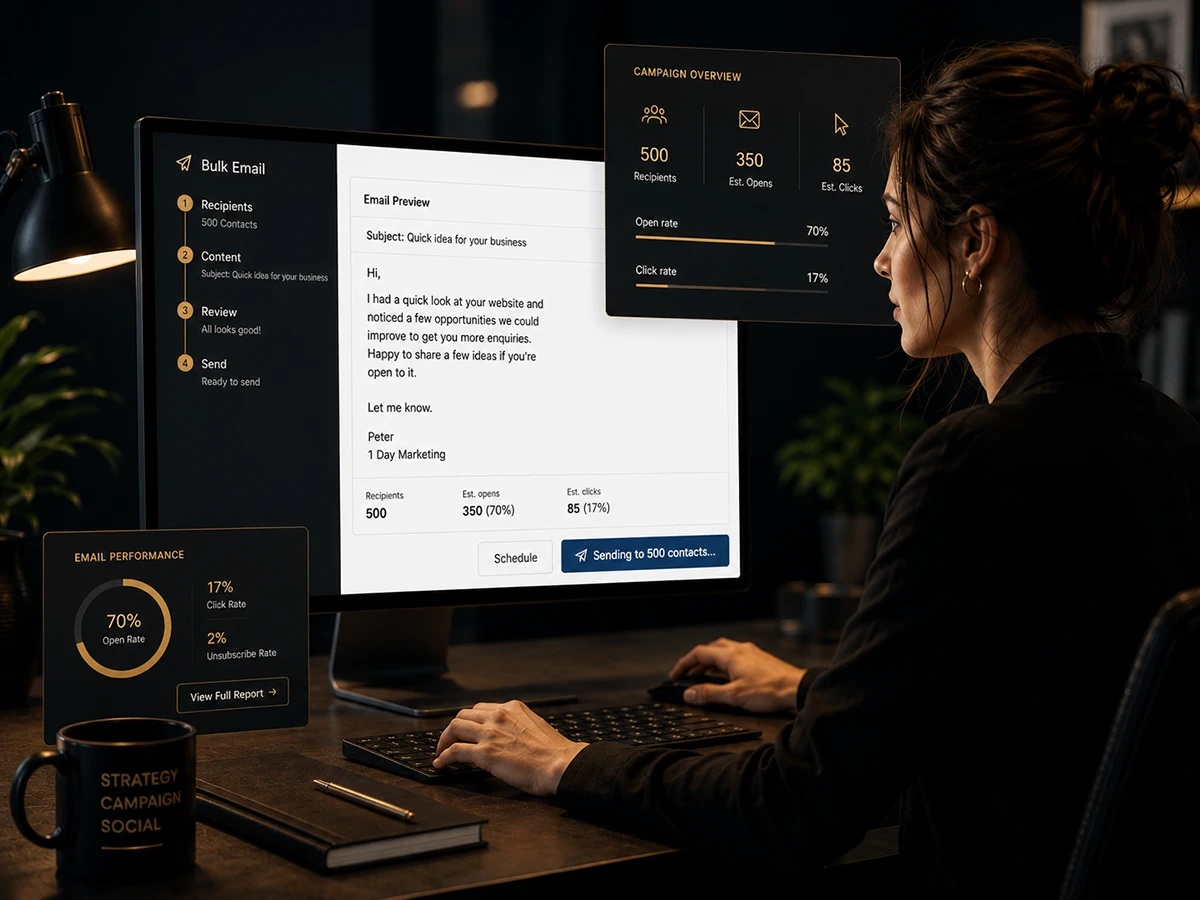
- Open rate. 20–30% is doing well. Under 10% means your subject lines or sender reputation need work.
- Click-through rate. 2–5% of opens is solid.
- Unsubscribes. 0.5% or less is normal. Higher means the wrong message or too often.
- Conversions. The point usually isn’t an instant sale. It’s being the first person they think of when they need you.
Authority is built one email at a time
Send regularly, always ask permission, and share what you know. In six months you’ll have something worth more than any paid ad campaign.
If you know you should be emailing your customers but it never happens, an outsourced marketing manager can set up the platform, build the list properly and keep the emails going out.
Ready to start an email list that actually gets opened?
Book a free 20-minute discovery call or marketing health check — no pressure, no jargon.
Book your free 20-minute sessionFrequently Asked Questions
How often should a small business send emails?
Whatever you can sustain, weekly or fortnightly. Consistency matters more than frequency.
Is it okay to buy an email list?
No. Bought lists hurt your sender reputation and land you in spam. Build your list from people who’ve given permission.
Which email platform should I use?
Mailchimp, ActiveCampaign or similar. Any proper platform handles unsubscribes, deliverability and reporting for you.
1 Day Marketing. One day at a time. Based in Ipswich, serving small businesses across Brisbane and beyond.