
1 Day Marketing
9 Free Ways to Market Your Business (That Actually Work)
Paid ads are noise. Most small businesses throw money at Facebook and Google hoping something sticks, when their best customers are usually won through visibility, trust, and relationships — not ad spend.
Here are nine channels you can own without spending a dollar. No fancy tools, no agency retainer. Just tactics that work if someone actually shows up and does them, every week, without fail.
1. Find Customers in Facebook Groups
Join local and industry groups where your customers already hang out — “Brisbane Small Business,” “Ipswich Mums,” trade-specific groups. Answer questions and solve problems. Don’t pitch. When someone describes your exact problem, mention what you do naturally, not as a hard sell.
One post per group per week is usually enough to generate real conversations. Track which groups actually turn into repeat clients and put your time there.
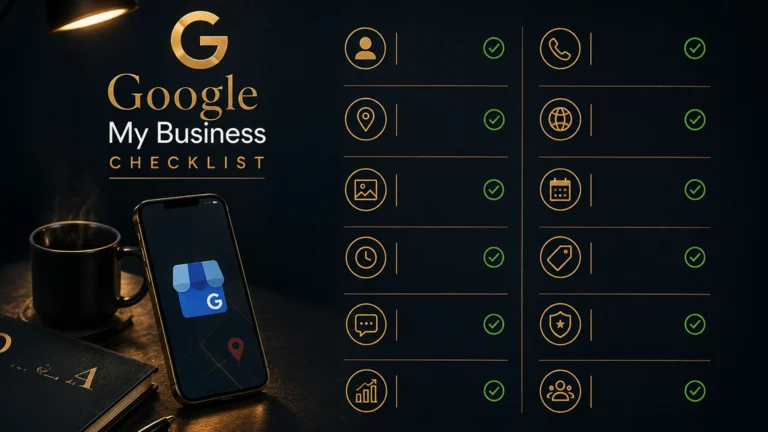
2. Improve Your Google Business Profile
If you already have a profile, make it work harder. Add a professional photo, accurate hours, and a description that includes what your customers actually search for. Post updates weekly. Add an FAQ section with real customer questions. Respond to every review, good or bad — it shows you’re paying attention.
Update your details immediately if anything changes. An out-of-date profile costs you more customers than a missing one.
3. Build Trust With Google Reviews
Reviews are one of the biggest factors in local search ranking, right after profile accuracy. After a successful job, ask for one: “We’d love your feedback on Google — takes 30 seconds.” Send a direct link so there’s no friction.
Don’t fake reviews, and don’t panic over a bad one. Respond respectfully and show you care about fixing it. Aim for five or more reviews in your first three months — that’s the threshold where reviews start meaningfully affecting your ranking.
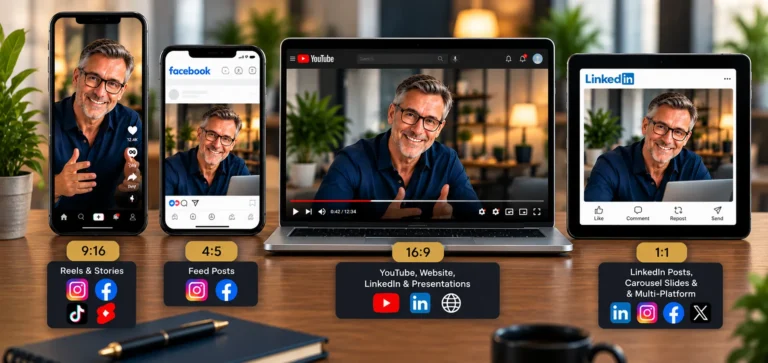
4. Post on Social Media (The Simple Way)
Pick one platform — Instagram, Facebook, or LinkedIn, not all three — and post three to four times a week. Use a 4:1:1 ratio: four value posts, one soft sell, one direct call to action. Don’t chase trends. Consistency beats perfection, and one hour of planning a week saves you scrambling daily.
5. Get Found in Search
SEO starts with your website. Write one blog post a week targeting a keyword your customers actually search — “best marketing for plumbers in Brisbane,” not “plumbing marketing tips.” Include your suburb and local phrases naturally, and link to your posts from your social media and email.
It takes three to six months to see real movement, but the traffic it builds is free and it compounds.
6. Sell to People You Already Know
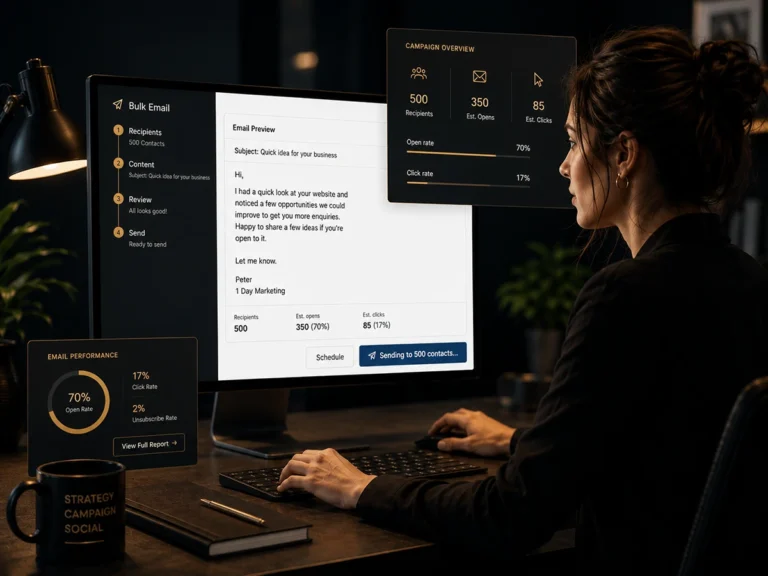
Past customers are far easier to sell to than strangers. Build a simple email list — every customer gets added, with permission — and send one email a month: an update, a tip, a win, or a gentle reminder. Reactivate dormant customers annually with a “here’s what’s new” message.
One repeat customer at full price beats ten cold leads at a discount, and this channel costs almost nothing to run.
7. Connect on LinkedIn (Without Being Pushy)
Post two to three times a week — client wins, industry observations, real thoughts, not recycled quotes. Engage with your ideal customers’ posts by commenting thoughtfully, not just liking. Send connection requests with a specific reason attached, not a pitch.
Once connected, nurture the relationship for a couple of weeks before considering a casual message. Five to seven quality connections a week, focused on one industry at a time, beats mass-connecting with everyone.
8. Strategic Partnerships — Co-Market With Non-Competitors
Find businesses serving the same customer without competing with you — an accountant and a bookkeeper, a plumber and an electrician. Pitch something simple: “I’ll mention you in my next email to past customers, you mention me to yours.” No money changes hands, both sides get access to a new audience.
Start with two partnerships. If they’re working after three months, expand to five.
9. Referral Programs — Ask Happy Customers to Send Their Friends
After a good result, ask: “Do you know anyone else who’d benefit from this?” Sweeten it if you want — a credit, a discount, a gift card for a successful referral — and make it easy by giving them a message they can copy and send. Track who refers you and reward them again.
Nine channels, one requirement
Every one of them only works if someone actually shows up and does it — every week, for months.
The Part Nobody Tells You
Read back through that list. It’s nine separate habits, each with its own weekly rhythm, and every one only pays off if it gets done consistently, on top of running the business itself.
That’s the real reason most small businesses don’t get results from “free” marketing. It was never free. It costs time — and time is the one thing an owner running the business day-to-day doesn’t have spare.
This is exactly the gap an outsourced marketing manager fills. Instead of you trying to run Facebook groups, Google Business updates, reviews, social media, SEO, email, LinkedIn, partnerships, and referrals on top of everything else, someone senior takes ownership of it — one dedicated day a week, doing the work rather than just advising on it.
Rather have someone run these nine channels for you?
Book a free 20-minute discovery call or marketing health check — no pressure, no jargon.
Book your free 20-minute sessionFurther Reading
- business.gov.au: Marketing Your Business The Australian Government’s own guide to marketing basics for small business owners.
- Building Trust With Google Reviews A closer look at how reviews affect local search ranking and how to ask for them the right way.
- Organic Social Media, Done Right What’s actually worth posting, and what to stop wasting time on.
Frequently Asked Questions
Can small businesses really market for free?
Yes — the channels above cost no money, but they do cost consistent time. Facebook groups, Google Business updates, reviews, social media, SEO, email, LinkedIn, partnerships, and referrals all work, but only if someone keeps showing up week after week.
Which free marketing channel should I start with?
Google reviews and your Google Business Profile first — they’re the fastest to set up and directly affect whether new customers find you in local search.
What’s the difference between doing this myself and hiring an outsourced marketing manager?
The tactics are the same either way. The difference is who’s responsible for actually doing them every week. An outsourced marketing manager takes that ownership off your plate for a fixed, dedicated day, rather than it competing with the rest of your job.
1 Day Marketing. One day at a time. Based in Ipswich, serving small businesses across Brisbane and beyond.